Michel Blanc-Dumont
Topics :
- Classical
- Western
- Blueberry Universe
- Action
- Detective novel
- Adventure
- Crime novel
- Thriller
The Western, Body and Soul
Even before beginning his career as a comic artist, Michel Blanc-Dumont worked for three years alongside his father, who was then the finest furniture restorer in Paris. Combined with his studies in applied arts, this sensitivity to imagery instilled in him the precision of a craftsman and a passion for detail that would never leave him. At the same time, a passion was growing within him that would become his signature: the history of the American West and the culture of the Plains Indians, coupled with a love of horses and horsemanship that would make him a rider as passionate as he was perfectionist. In short, the Western genre would become a way of life for him.
His first comic strips appeared in 1973 in Phénix, then in Jeunes Années, where he brought several Native American legends to life through is artwork. The following year brought a pivotal encounter: his meeting with writer Laurence Harlé, with whom he created Jonathan Cartland, first serialized in Lucky Luke Magazine and then in Pilote starting in 1977. The duo revolutionized a genre that was thought to be stagnant: whereas the Western was often reduced to its traditions or Italian-style parodies, Blanc-Dumont and Harlé breathed new life into it, infusing it with truth, emotion, and lyricism, along with a penchant for grandiose settings and an unapologetic flair for the fantastical. This innovative work earned him the Alfred Award for Best Album of the Year in 1988 for the eighth volume of the series, Les Survivants de l'ombre.
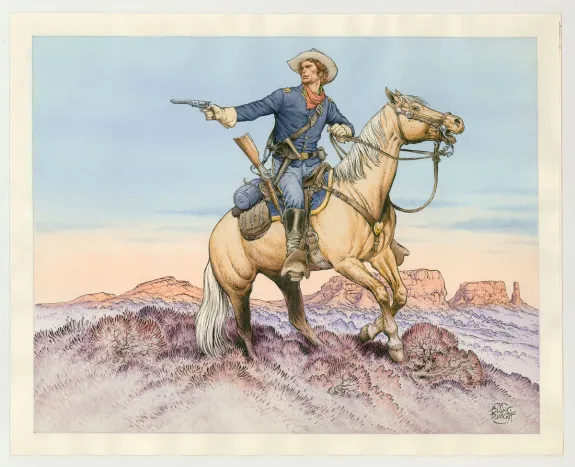
His loyalty to Jonathan Cartland was unwavering, but in 1995, the series came to an end following tensions between his publisher and his writer. In the meantime, he had ventured into a different genre: in 1990, he co-created with Greg the detective series Colby, set in 1940s America. But the West came calling in a big way: at the request of Jean Giraud, he returned to his drawing board in 1997 with La Jeunesse de Blueberry based on texts by François Corteggiani.
Behind the meticulousness of his linework, he saw himself first and foremost as a storyteller: “I’m from the school of Jijé,” he summarized. “We are, above all, storytellers,” believing that black and white should be sufficient in and of itself. A discreet master of realistic comic art, he carried the Western “within him”—from the Native American legends of his youth to the wide-open spaces of Blueberry—with the consistency of a craftsman and the sensitivity of a poet.
Pages and artworks from Michel Blanc-Dumont See all
-
-
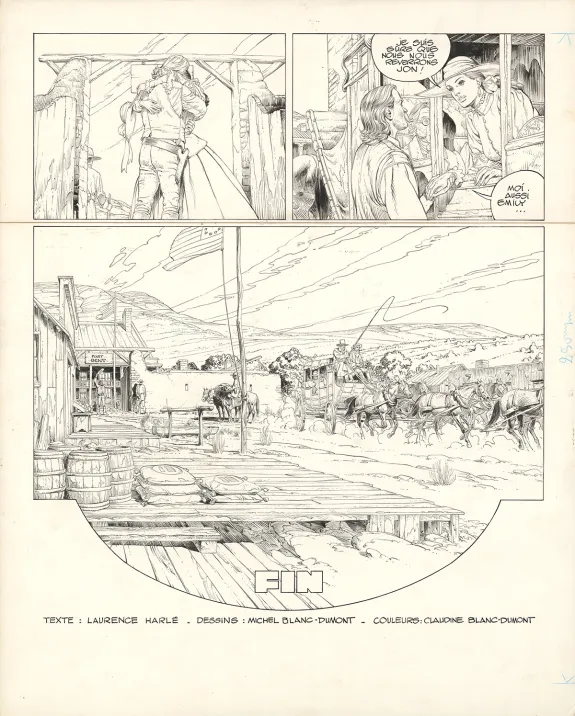
Original page 46 with color layout in blue
2 000 € -
-
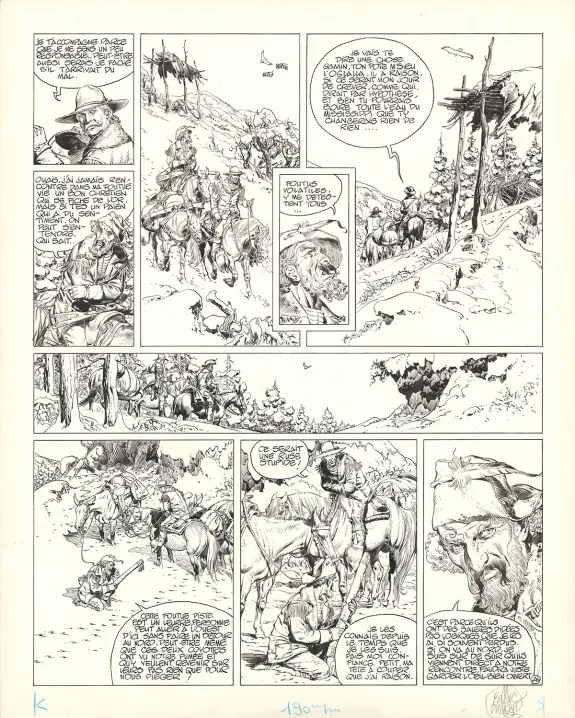
Planche originale n°26
2 500 € -
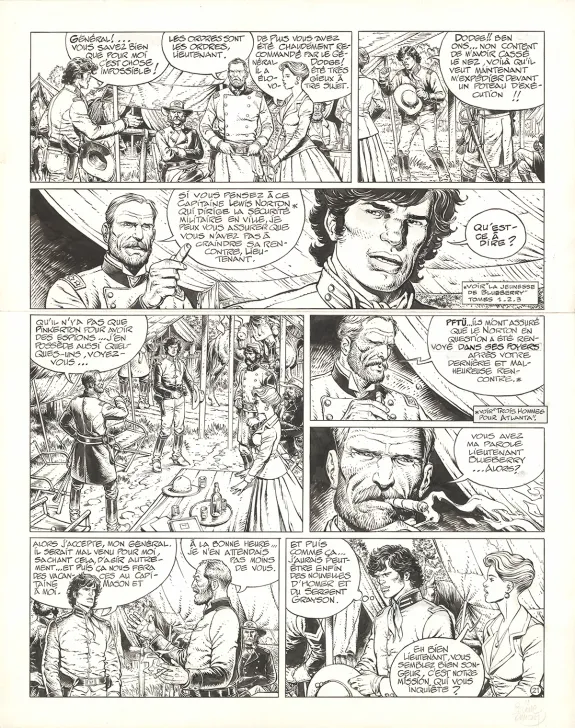
Original page 21 with color layout, drawing patches in panel 5
1 200 € -
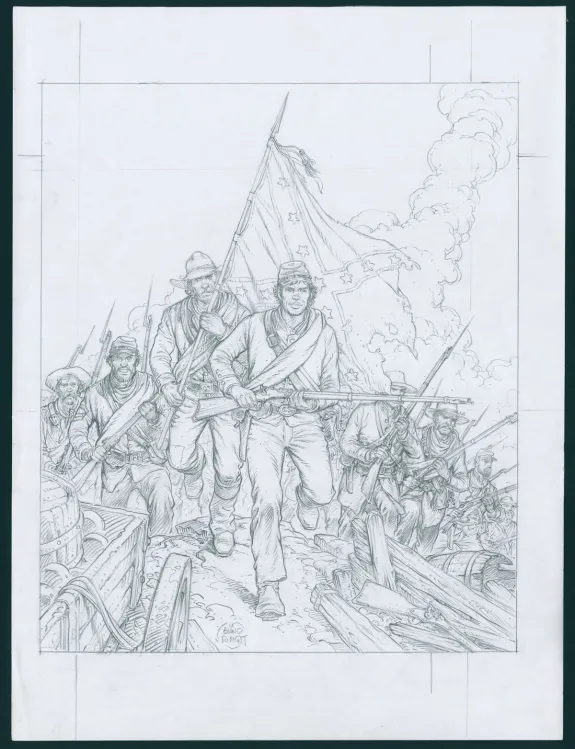
Original Sketch for the Cover
2 000 € -
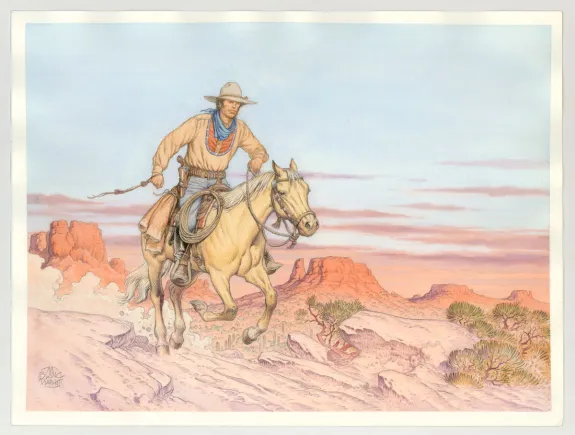
-
-
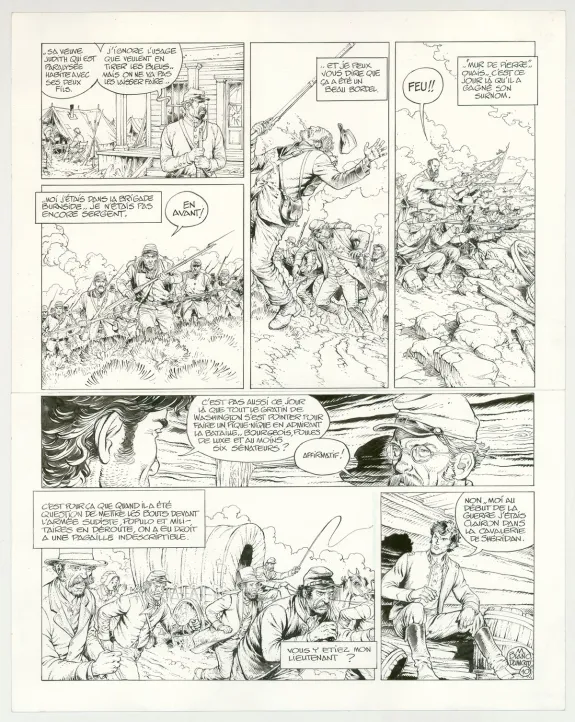
Original page 10
900 € -


You will also like...
-

-
-
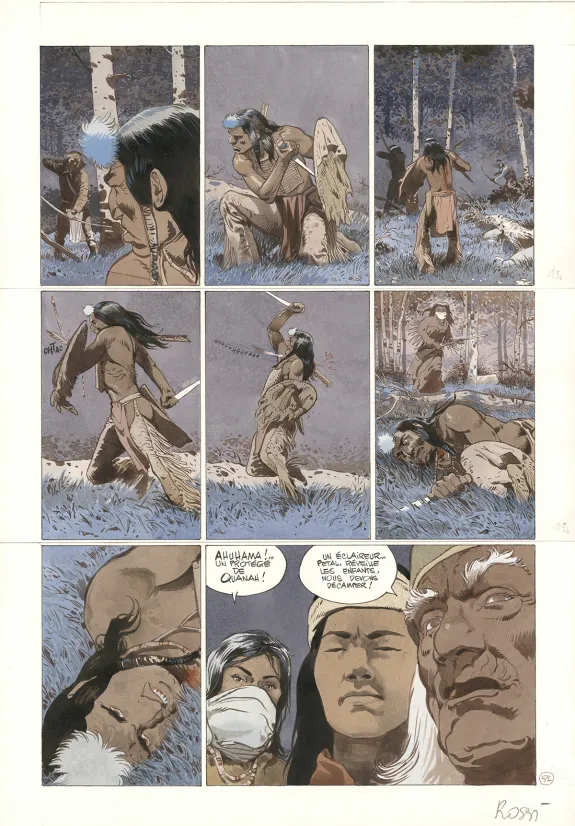
-
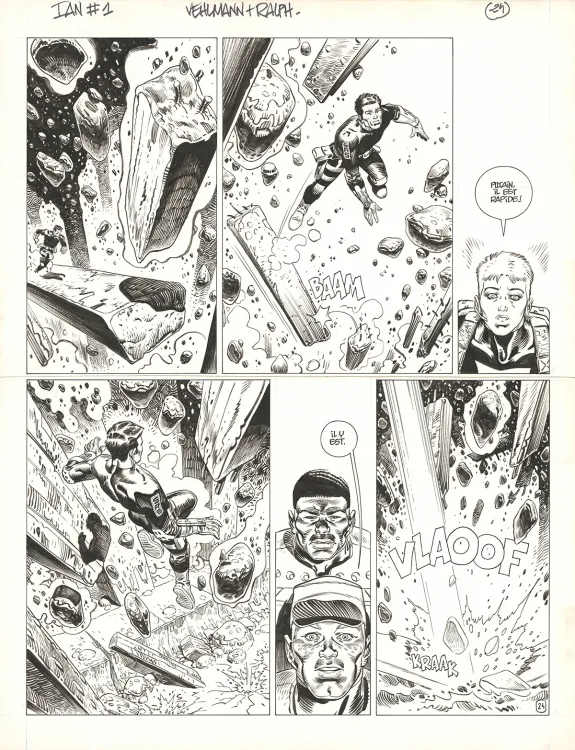
-
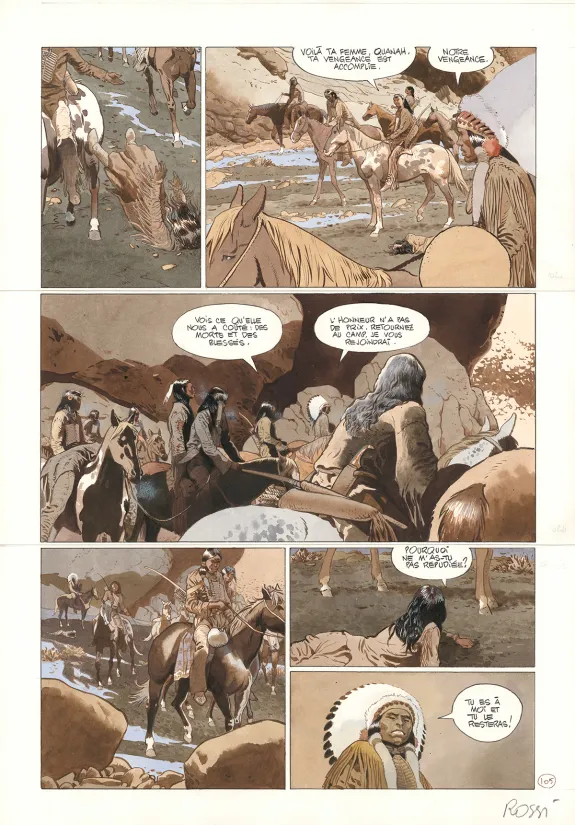
-
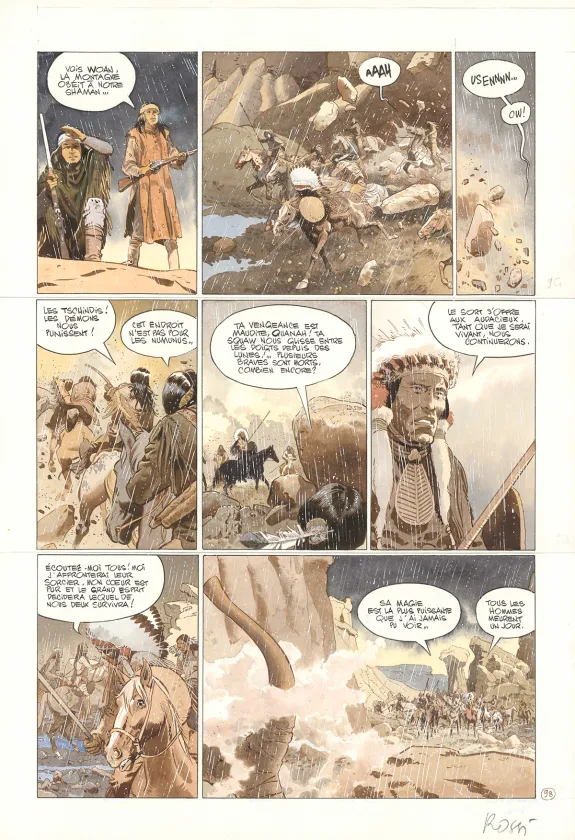
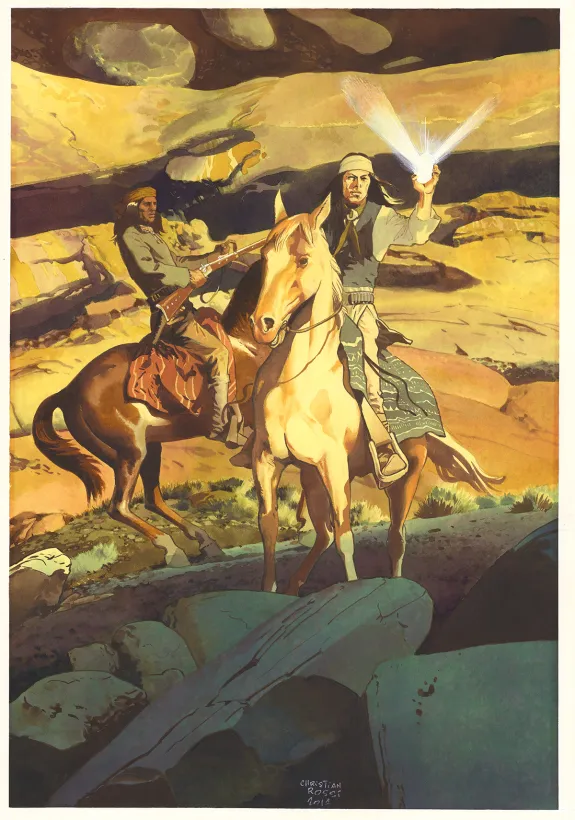
Christian Rossi
Comanche Trail
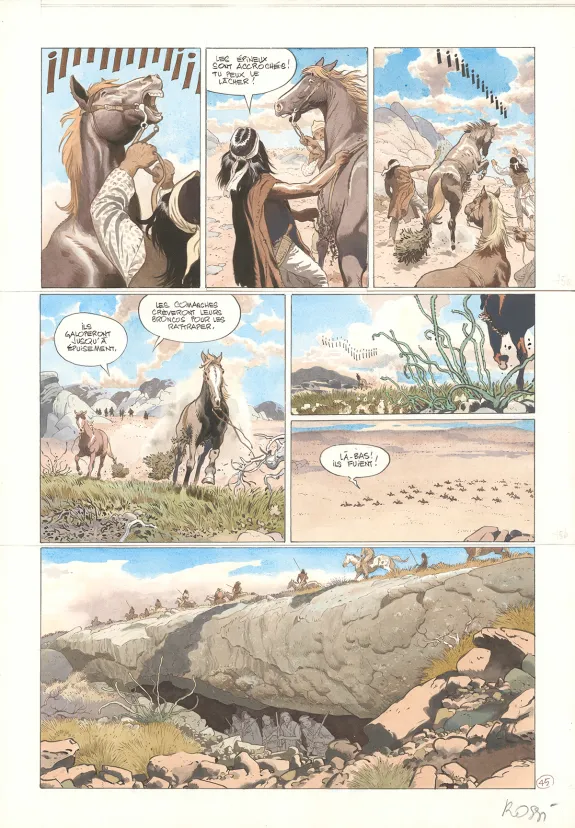
Original page 98, drawing patch in a Speech bubble in the last panel
3 500 € -
-

-
-

-
-