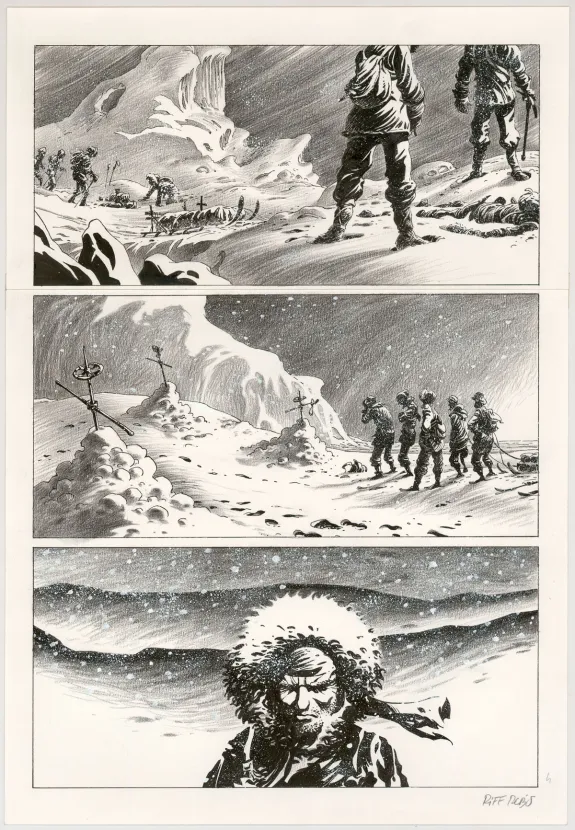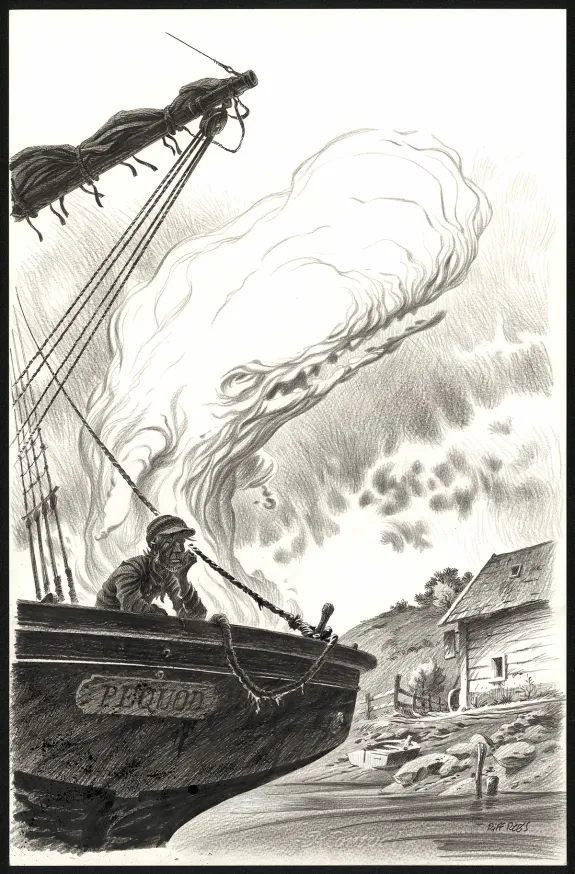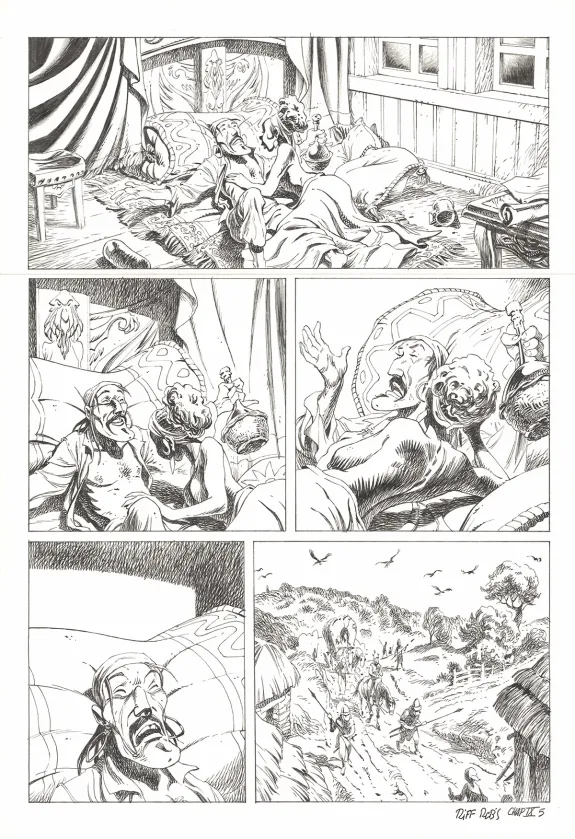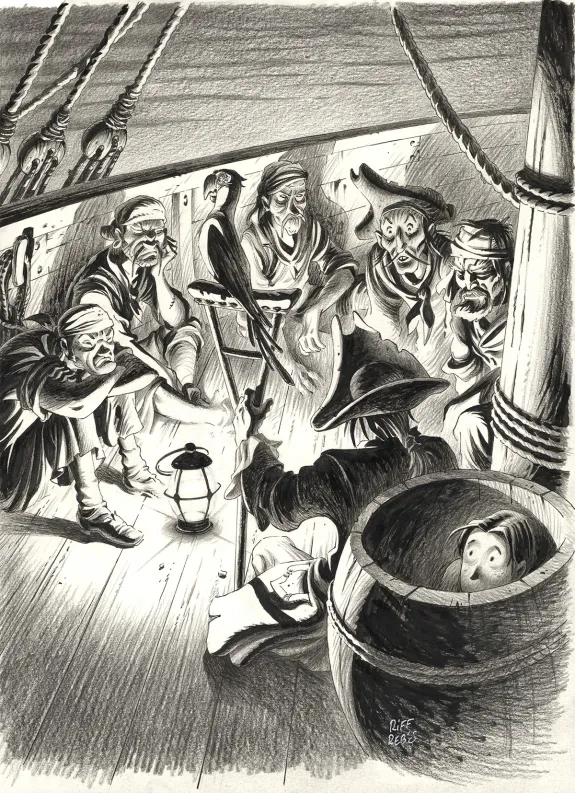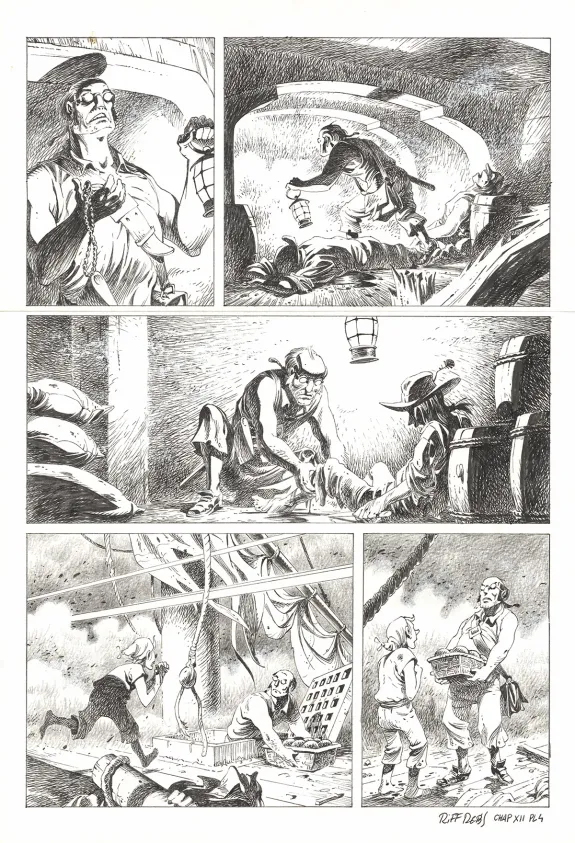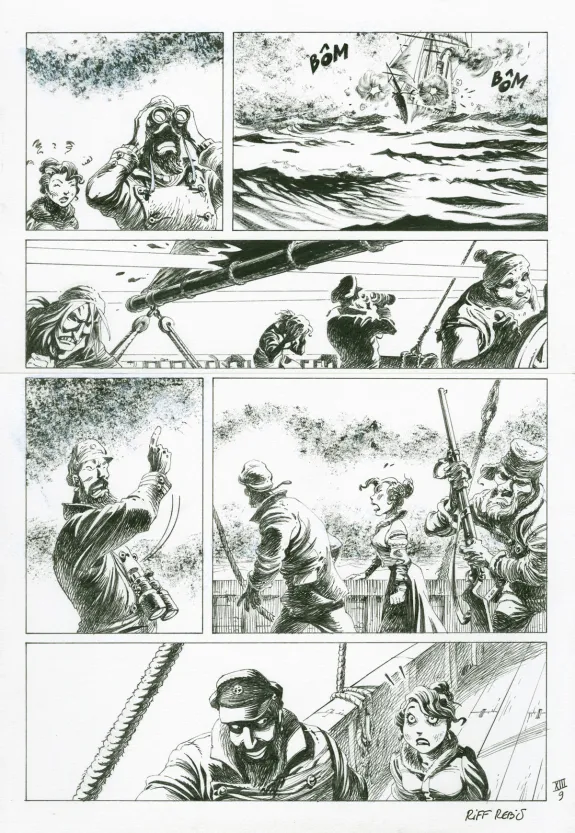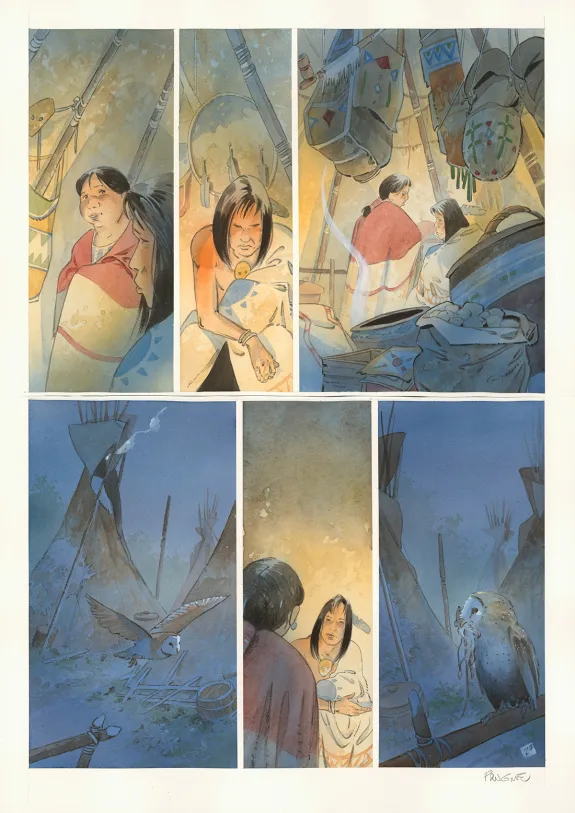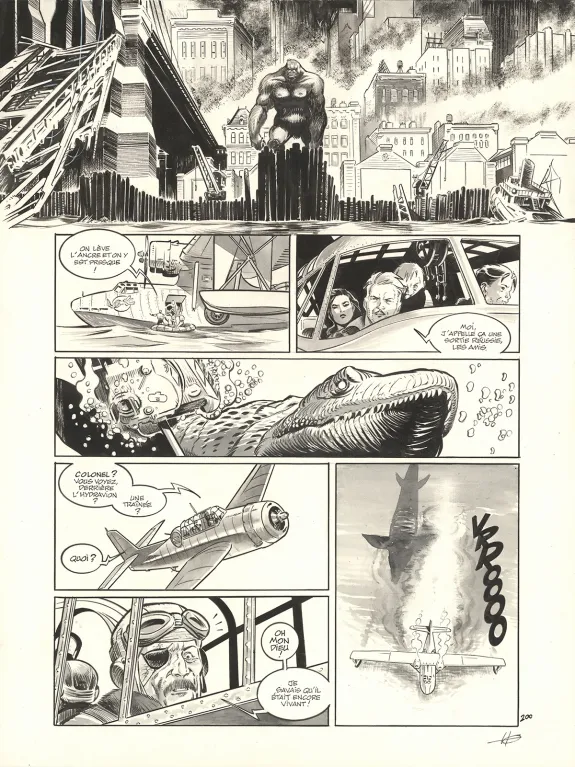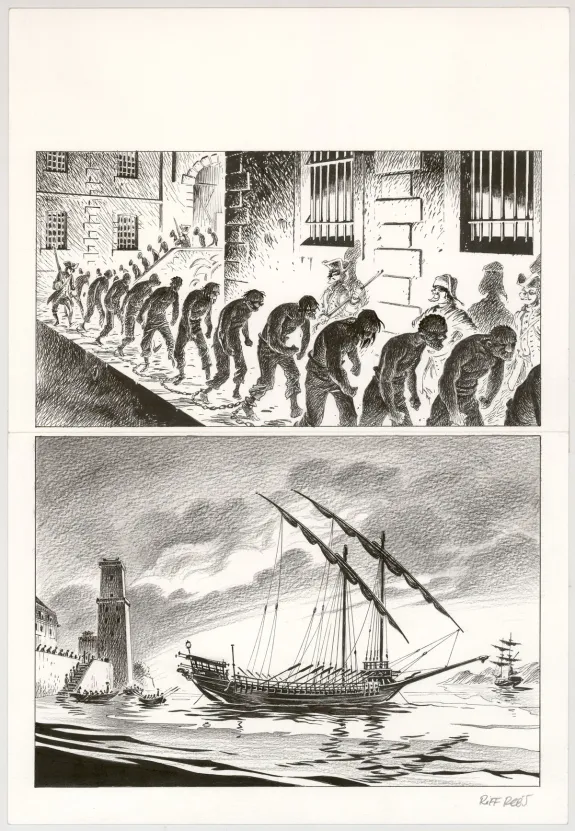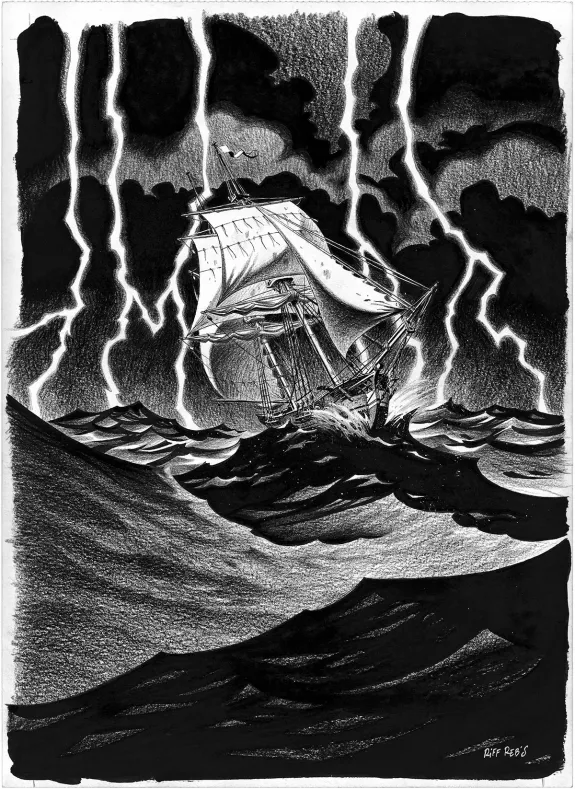
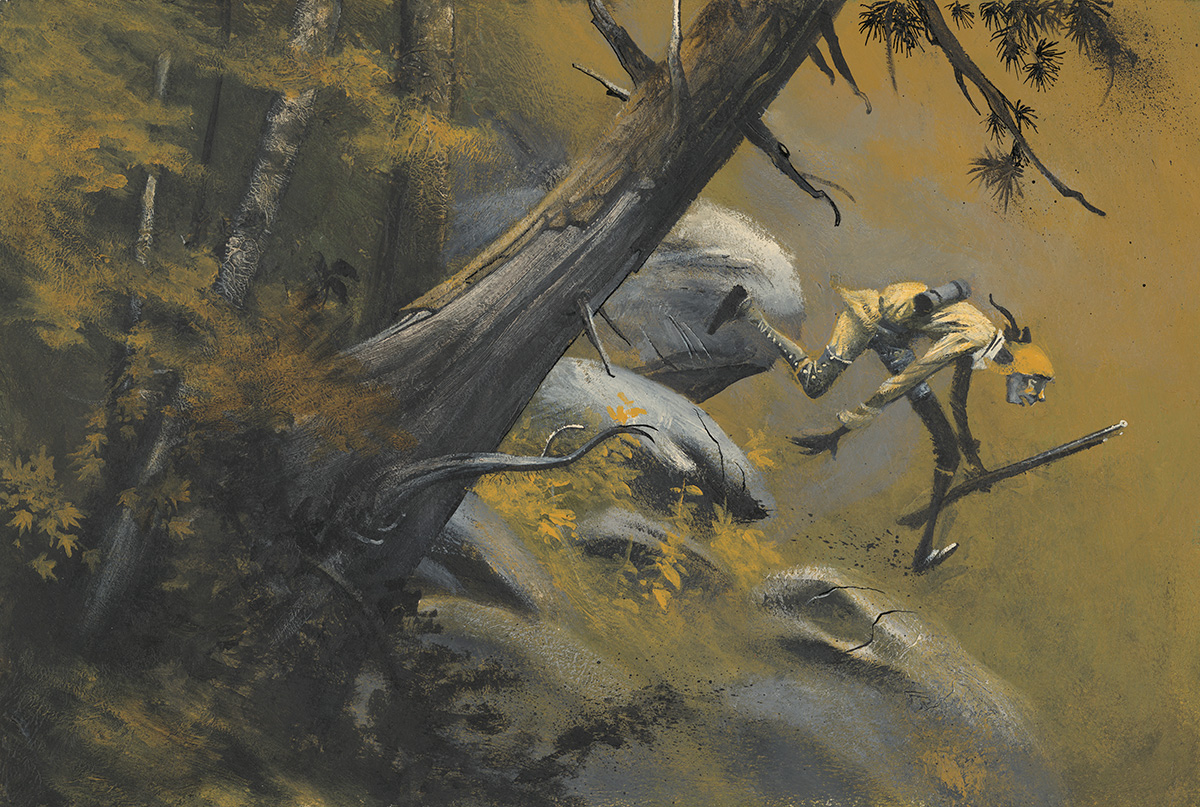
Cromwell’s dense, charcoal-like style is a true reflection of the man himself: punk and underground. He brilliantly subverts the conventions of the Ninth Art through textural effects with rough, gritty surfaces. Each page exudes a heavy, apocalyptic, sticky atmosphere that is both unsettling and poetic. It is the work of a painter as much as a comic artist—corrosive and instantly recognizable.
To preserve your works on paper, we recommend that you never expose them to direct light, as UV rays can damage the mediums used. Paintings made with pastel or charcoal require special care to avoid rubbing. Works containing watercolor are particularly sensitive to light, unlike gouache and acrylic.
We advise you to display them away from windows, and to use frames made from pH-neutral conservation materials and “Museum” glass with anti-UV and anti-reflective treatment. If you prefer to keep your works unframed, we recommend storing them flat, in drawing cartons, with sheets of pH-neutral permanent paper in between. Keep them away from light and humidity.
Cromwell, a provocateur at heart, is the son of an officer in the Foreign Legion. Banned from reading comic strips during his childhood, he spent time with the Jesuits and then at the École Spéciale Militaire de Saint-Cyr, where, thanks to a subtle act of exam sabotage, he strayed from the path laid out for him by his father. After a stint with the paratroopers, he enrolled at the École des Gobelins… A year and a half later, the world of animation opened up to him, and through persistent nagging he managed to bring Riff Reb’s on board. Together, they went on to shake up the Ninth Art by founding Atelier Azylum… Within a few years, he had become one of the leading figures of a new school of comic art, skilfully blending vivid and innovative artwork with a often caustic, subversive narrative, as seen in Le Bal de la Sueur (The Sweat Ball), Minettos Desperados, Anita Bomba… Complete biography.