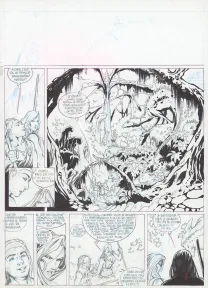
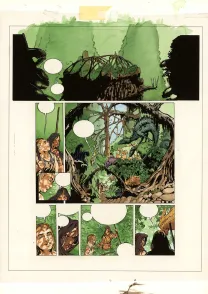
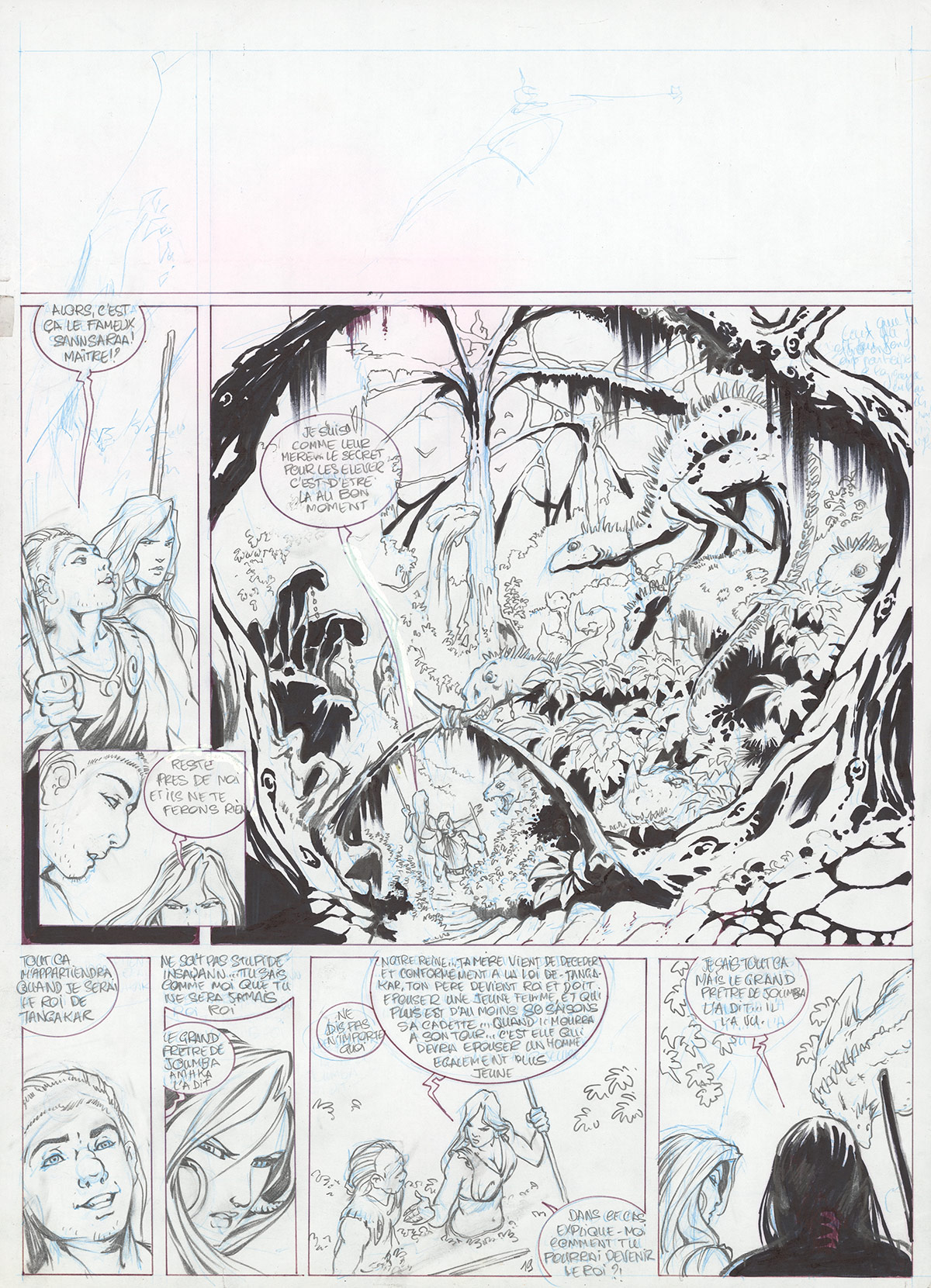
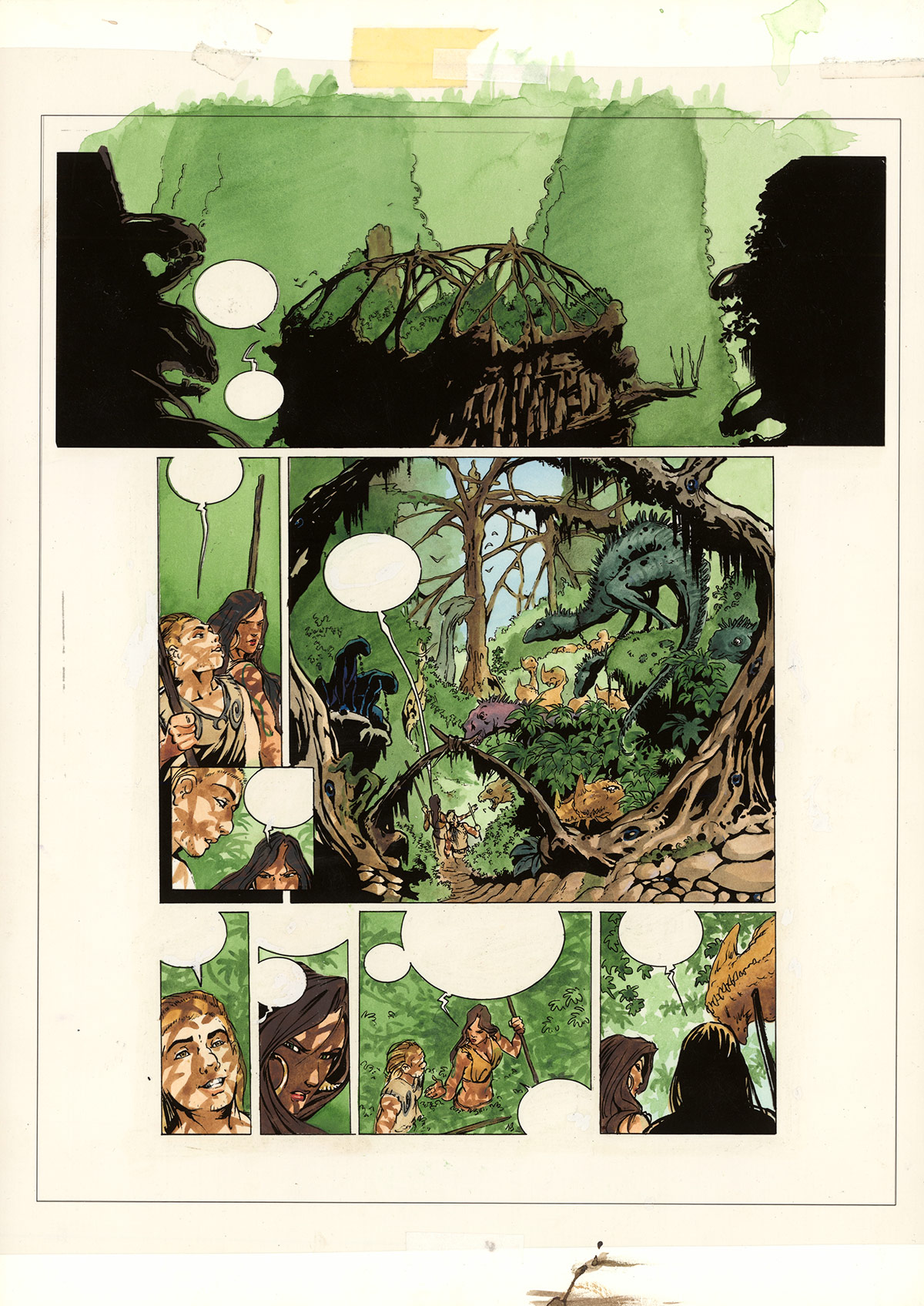
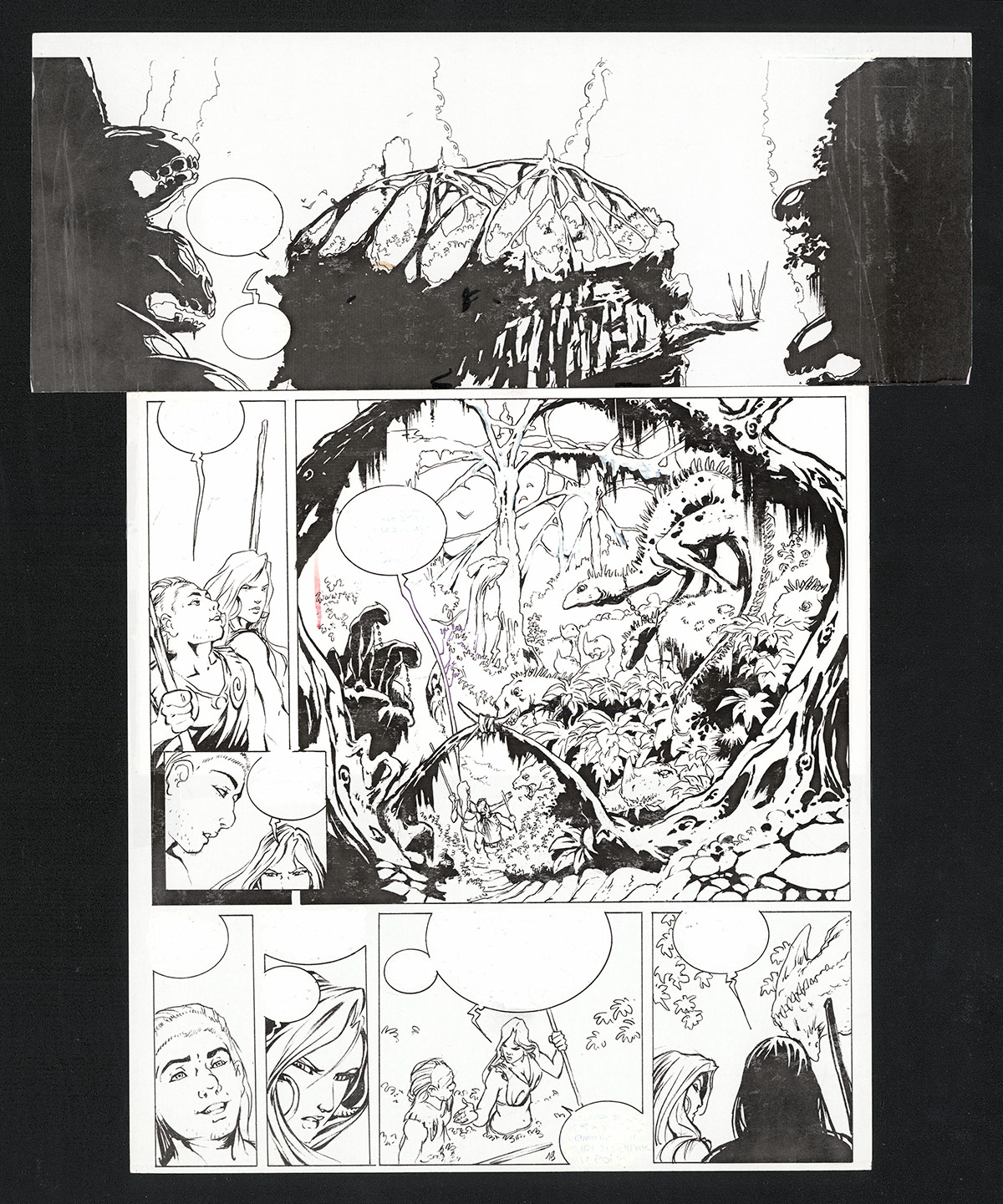
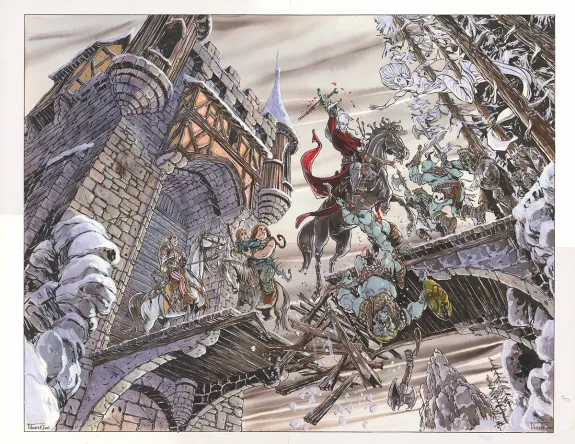
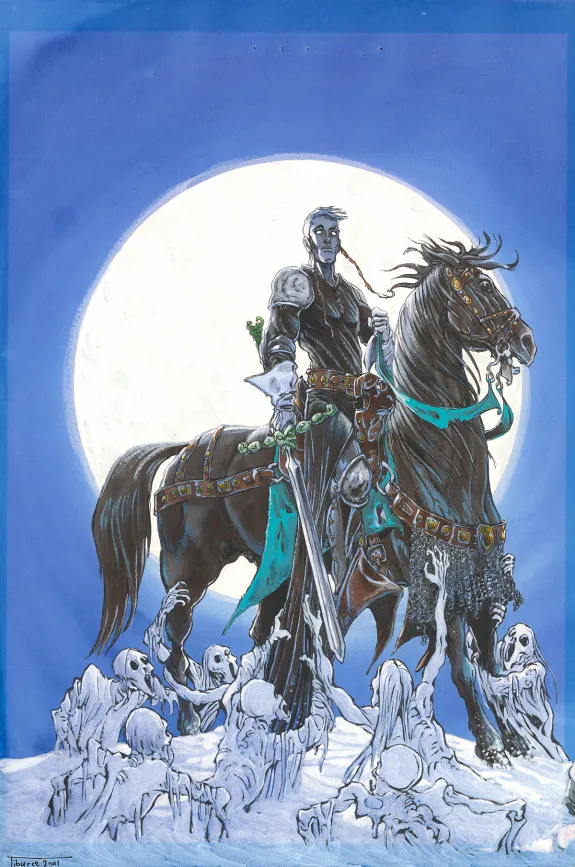
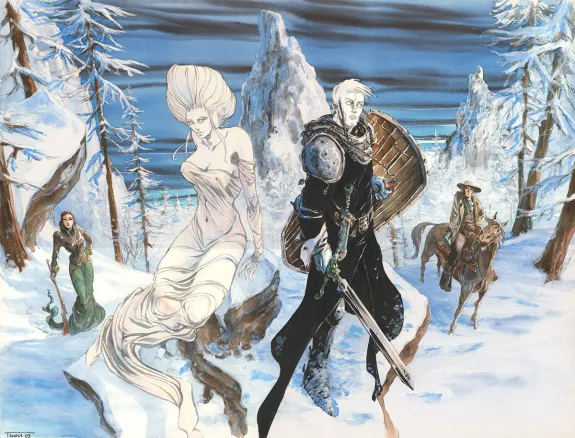
Christian Paty brilliantly captures the characteristics of animals with a dynamism and expressiveness that command respect. Highly skilled at rendering animal postures and behaviors, he manages, through the gazes and attitudes of his characters, to convey a broad range of powerful emotions. His meticulously detailed and realistic settings anchor these fables in tangible environments (such as the Australian bush or the Arctic tundra). With his colorful dialogue and profound themes, Paty succeeds in captivating a young audience while offering a narrative depth that will appeal to a mature readership.
To ensure that your pages are kept in good condition, we recommend that you never expose them to direct light, as UV rays can damage the media used to produce them. Although Indian ink is a perennial material, the paper support may change when exposed to UV light. Note that watercolor plates require special attention, as this medium is particularly sensitive to light. Pieces containing pastel or charcoal require special care to avoid rubbing.
We advise you to display them away from windows, and to use frames made of pH-neutral conservation materials and “Museum” glass with anti-UV and anti-reflective treatment. If you prefer to keep your works unframed, we recommend storing them flat, in drawing cartons, with sheets of pH-neutral permanent paper in between. Keep them away from light and humidity
Born in 1969 in Nantes, Christian Paty began his career as a rough artist and later as an art director at an advertising agency, all while creating comic art as a hobby. His career took off in 1997 with Damoiselle Gorge, co-created with Tiburce Oger, followed by a long collaboration with the writer Ange beginning in 2001 with La Cicatrice du Souvenir (The Scar of Memory) and Kookaburra Universe. Under the pseudonym Dzack, he launched the humorous series Les Blondes in 2005, before turning to documentary comic art (Nota Bene, Les Étoiles de l'Histoire) and animal fables: Uluru – Une odyssée australe (2023, with Crisse) and Le Voyage de Renn (Renn's Journey, 2024), which he wrote, illustrated, and colored entirely on his own—two coming-of-age stories driven by a keen eye for biological detail and a direct-painting technique that has been praised by critics. Complete biography.