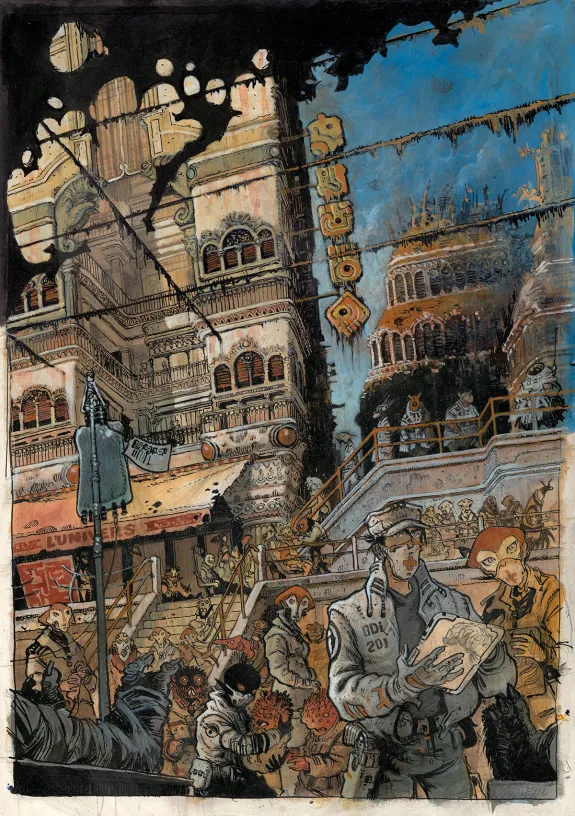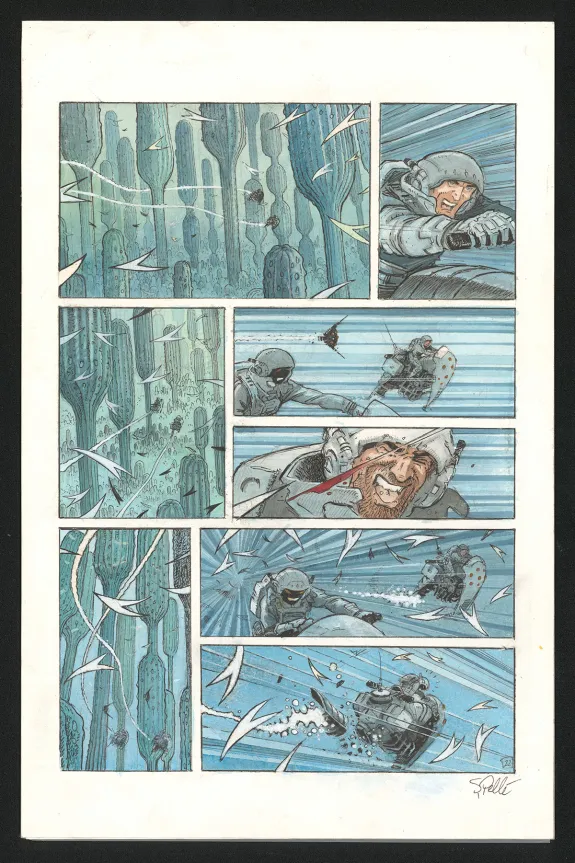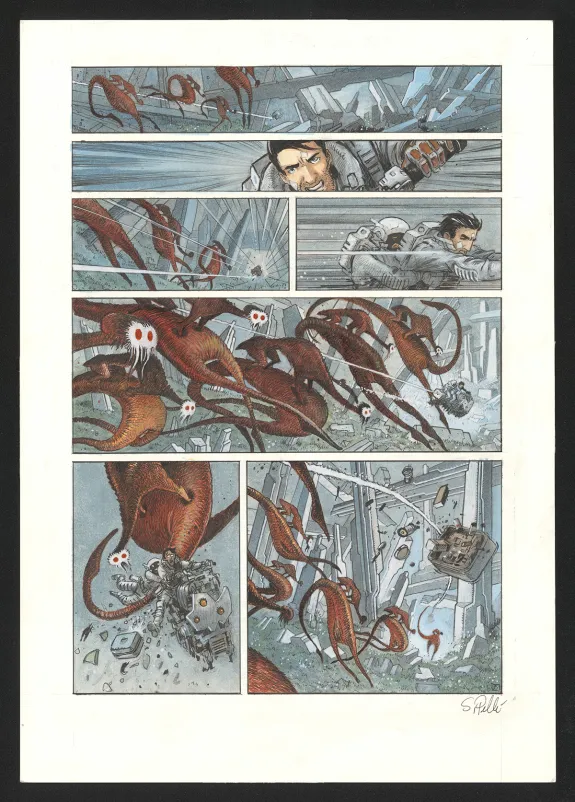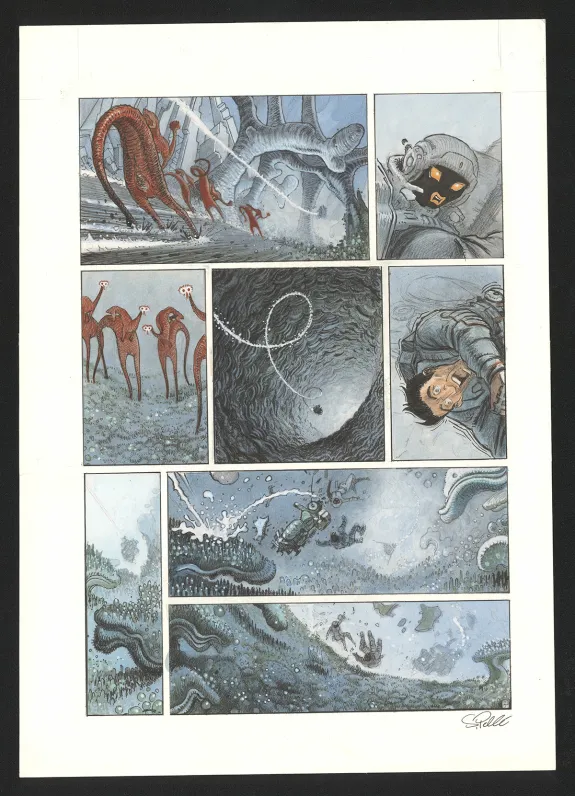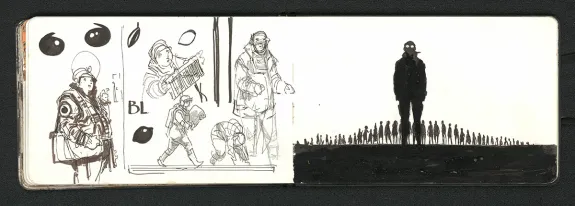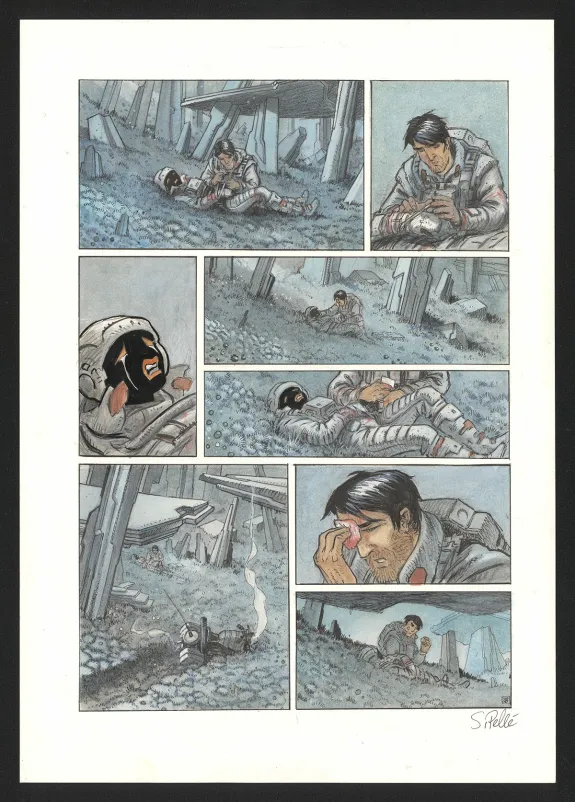
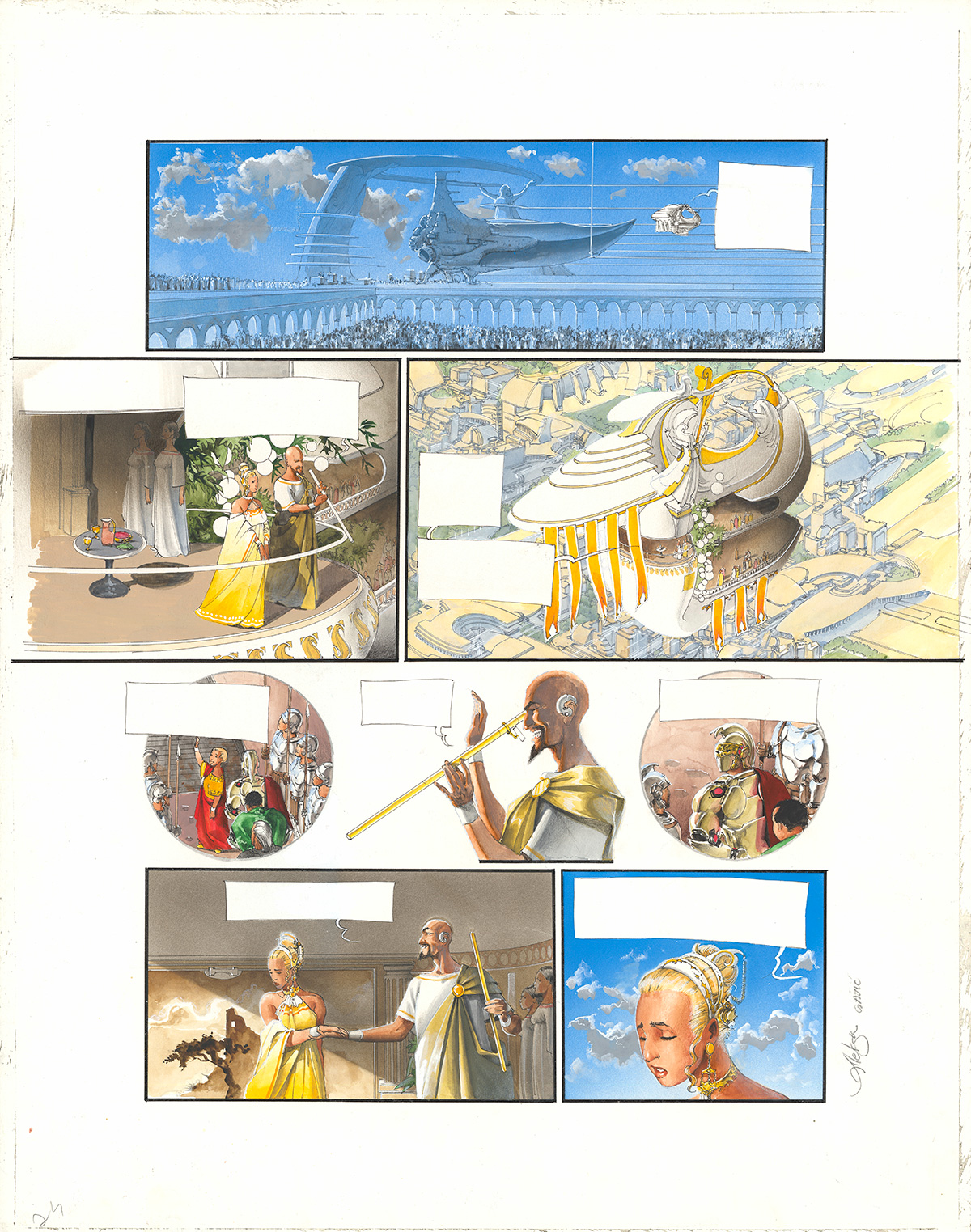
To ensure that your pages are kept in good condition, we recommend that you never expose them to direct light, as UV rays can damage the media used to produce them. Although Indian ink is a perennial material, the paper support may change when exposed to UV light. Note that watercolor plates require special attention, as this medium is particularly sensitive to light. Pieces containing pastel or charcoal require special care to avoid rubbing.
We advise you to display them away from windows, and to use frames made of pH-neutral conservation materials and “Museum” glass with anti-UV and anti-reflective treatment. If you prefer to keep your works unframed, we recommend storing them flat, in drawing cartons, with sheets of pH-neutral permanent paper in between. Keep them away from light and humidity.
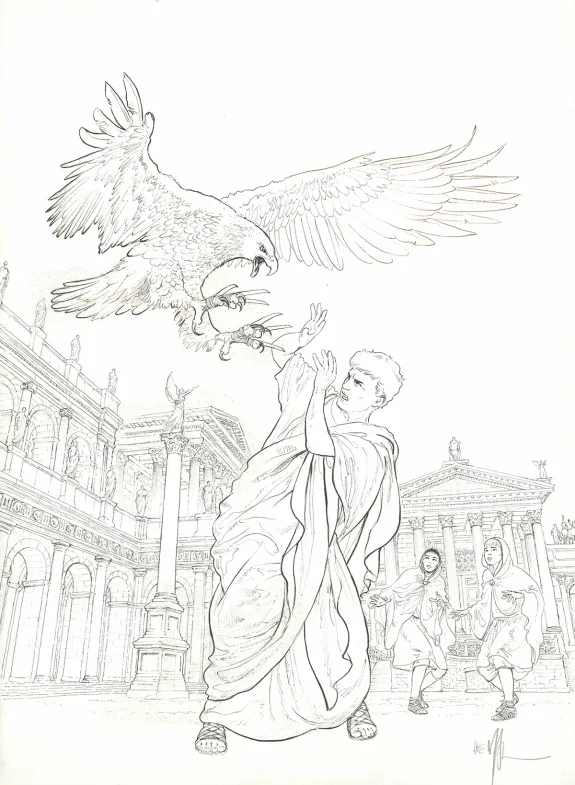
Aleksa Gajic was born in Belgrade in 1974. After graduating in Applied Arts, Gajic decided to try his luck in France, bringing with him the comic album he had created during his studies. In 1998, he was spotted by the creative duo Denis Bajram and Valérie Mangin, who invited him to collaborate on The Scourge of the Gods (Le Fléau des Dieux). Unfortunately, the outbreak of war delayed the project, and it was only two years later, when the team reunited at the Angoulême International Comics Festival, that work resumed. The first volume of the series was published in 2001. Five additional volumes followed, released by Soleil Editions between 2001 and 2006. Subsequently, Gajic contributed to a number of collaborative projects involving multiple artists. He also devoted considerable effort to the feature-film adaptation of his graduation thesis, Technotise, a futuristic science-fiction story that would later become one of his most recognized works. The success of The Scourge of the Gods established Gajic as one of Serbia’s most celebrated comic-book artists, leading to frequent commissions for institutional and public-awareness campaigns. He has also worked for the popular Serbian magazine Politikin Zabavnik.