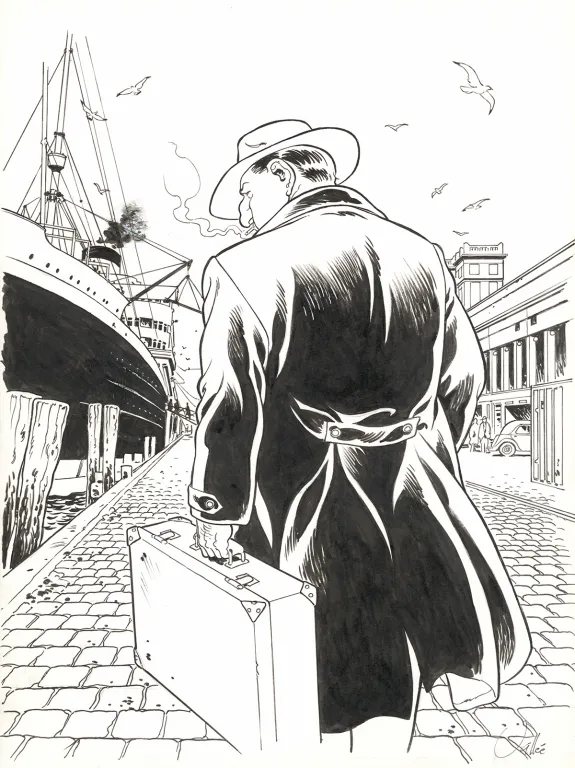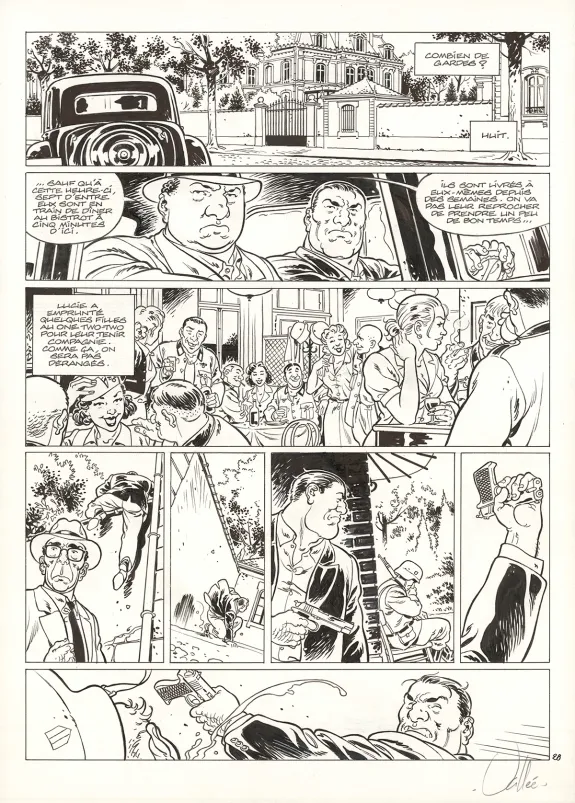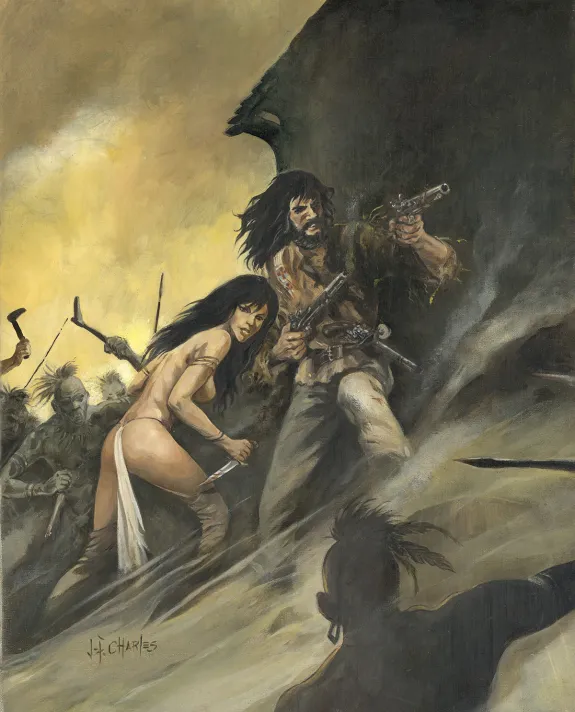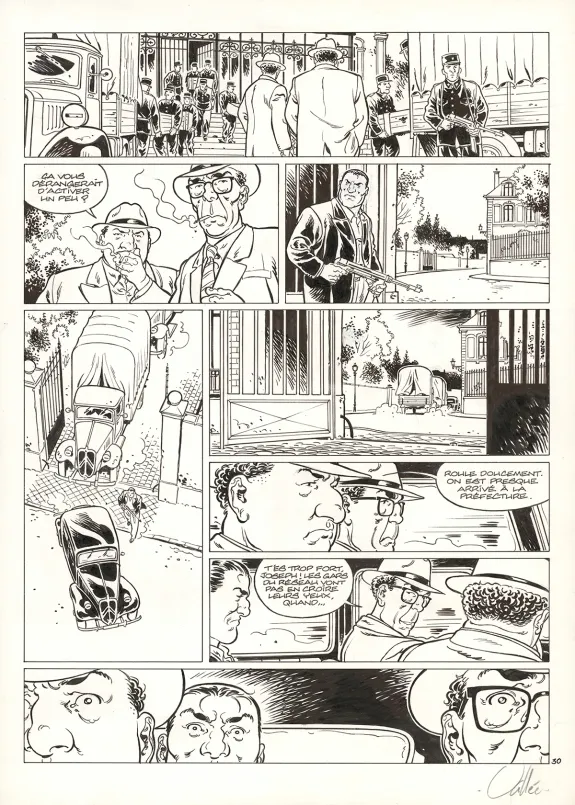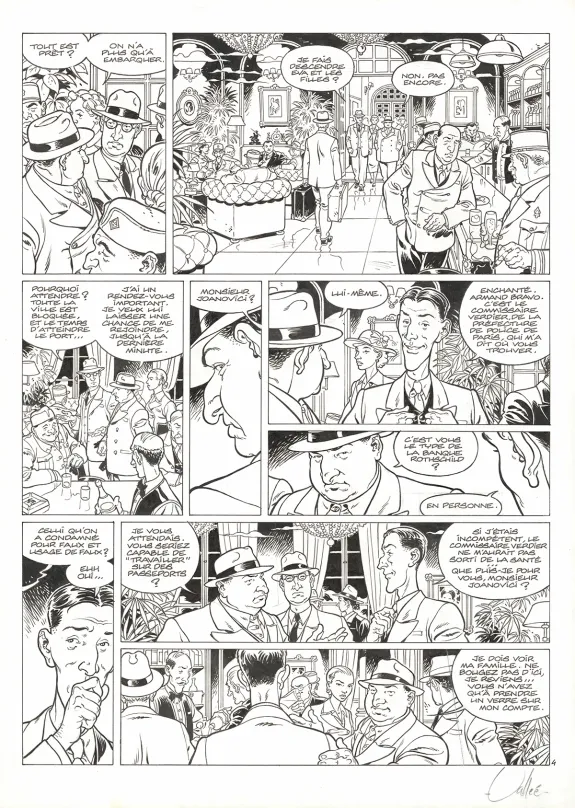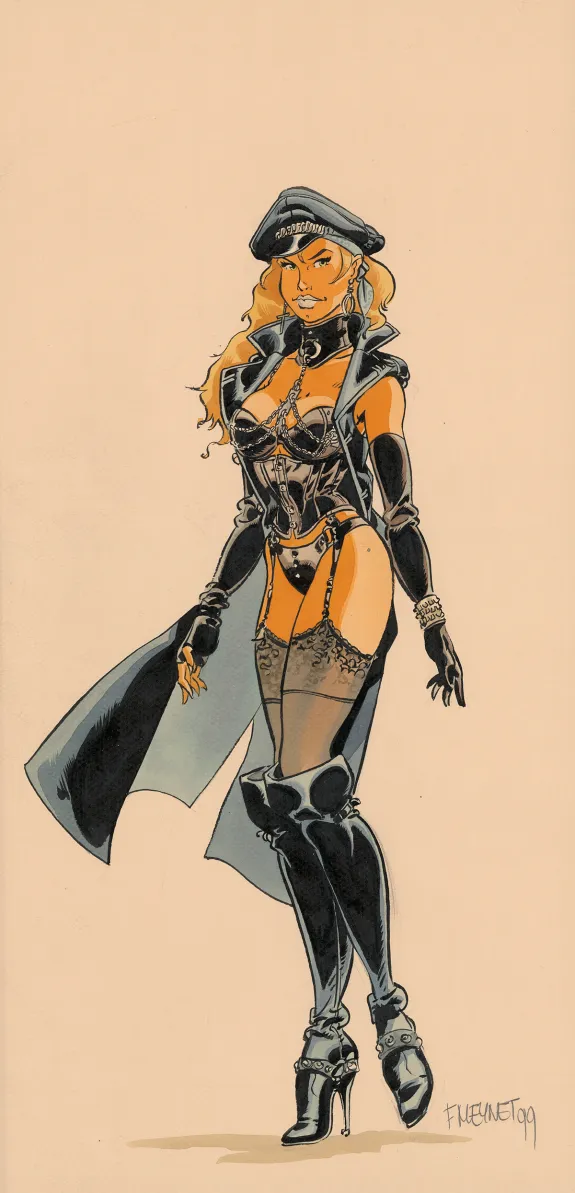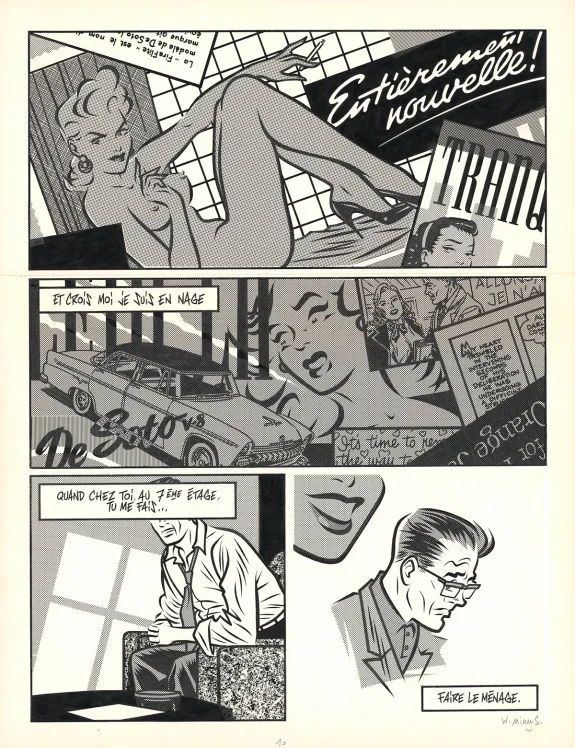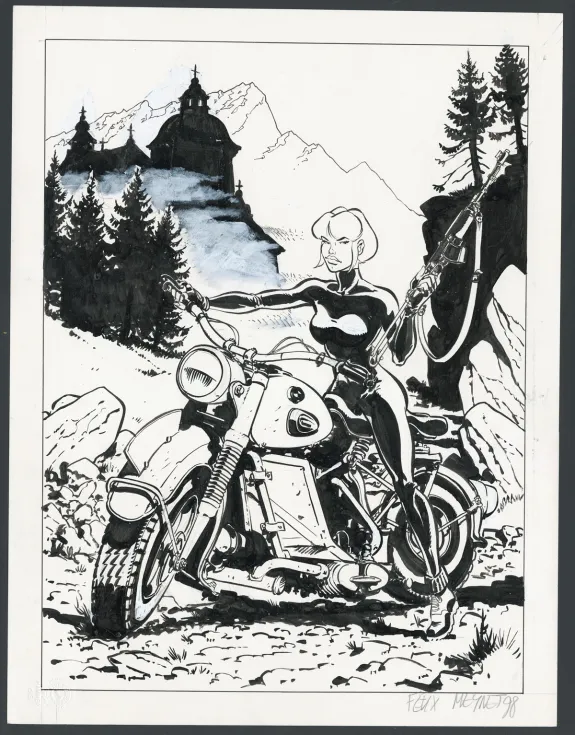
To ensure that your pages are kept in good condition, we recommend that you never expose them to direct light, as UV rays can damage the media used to produce them. Although Indian ink is a perennial material, the paper support may change when exposed to UV light. Note that watercolor plates require special attention, as this medium is particularly sensitive to light. Pieces containing pastel or charcoal require special care to avoid rubbing.
We advise you to display them away from windows, and to use frames made of pH-neutral conservation materials and “Museum” glass with anti-UV and anti-reflective treatment. If you prefer to keep your works unframed, we recommend storing them flat, in drawing cartons, with sheets of pH-neutral permanent paper in between. Keep them away from light and humidity
Philippe Berthet (1956) trained at the École Saint-Luc in Brussels (1974–1977), where he worked alongside Andreas, Schuiten and Foerster as part of the ‘Neuvième Rêve’ collective, before studying under Eddy Paape. He published his first comic strips in niche magazines before making his breakthrough in 1980 in Spirou with Couleur Café. In 1981, he co-created Le Marchand d’Idées with Cossu, which was first serialised in Circus and published as four albums by Glénat, followed by Le Privé d’Hollywood (written by Rivière and Bocquet) in 1983, giving rise to a series of one-shots that prompted Dupuis to launch the ‘Berthet’ collection in 1985 (7 titles). In 1990, his collaboration with Tome resulted in Sur la Route de Selma (‘Aire Libre’, 1991), followed by his first solo album, Halona (1993). From 1994 onwards, the Pin-Up saga (script by Yann) established itself as his flagship work and brought him international acclaim. Complete biography.